
If you’re asking, “What does fentanyl smell like?” chances are you’re worried. Worried for yourself, or maybe for someone you love. It’s a question that comes from fear and a deep need to keep people safe, and I want you to know that your concern is valid. The reality of fentanyl is terrifying, and trying to find a clear sign, like a specific smell, is a natural way to feel more in control. Let’s walk through this together, clear up the confusion, and talk about what really works to stay safe.
What does fentanyl smell like?
To put it simply, pure fentanyl is completely odorless and tasteless. It has no distinct smell at all. This is one of the things that makes it so incredibly dangerous. You cannot rely on your senses to detect it. While some people anecdotally report a faint “sweet smell” from street drugs, this scent doesn’t come from the fentanyl itself.
Instead, it likely comes from cutting agents, sugars, or other substances mixed in with the drug. Because of its chemical structure, pure fentanyl doesn’t produce the volatile compounds that our noses can pick up, which is confirmed by chemical databases like PubChem. Relying on sensory cues like smell or taste is not only unreliable but also incredibly risky. There is no safe way to identify fentanyl by its smell, and any attempt to do so could have devastating consequences.
What is fentanyl?
Fentanyl is a powerful synthetic opioid. To understand its strength, imagine this: it’s 50 to 100 times more potent than morphine and about 50 times stronger than heroin. There are two main types of fentanyl you’ll hear about. First, there’s pharmaceutical fentanyl, which is made in strictly controlled labs and prescribed by doctors for severe pain, often after surgery or for advanced-stage cancer. It’s a legitimate and effective medication when used correctly.
Then there’s illicitly manufactured fentanyl, which is what’s driving the overdose crisis. This type is made in clandestine labs without any quality control. It’s often sold as a powder, dropped onto blotter paper, or made into counterfeit pills that look identical to real prescription opioids. Because it’s so potent and cheap to produce, it’s frequently mixed with other illicit drugs like heroin or cocaine, often without the user’s knowledge. This hidden danger is a major reason why seeking help for opioid addiction in Kentucky is more critical than ever.
Why you can’t rely on appearance to detect fentanyl
Trying to identify fentanyl by sight, smell, or taste is a gamble you can’t afford to take. Illicit drugs are unpredictable, and traditional methods of identification are completely ineffective. Fentanyl can be pressed into counterfeit pills that look exactly like prescription medications or mixed into powders, making it impossible to see. A tiny, lethal dose can be hidden in what looks like a normal amount of another substance.
This is often described as the “chocolate chip cookie effect.” Imagine a batch of cookie dough where the chocolate chips aren’t evenly distributed. One cookie might have only a few chips, while another has a huge, dangerous cluster. Fentanyl is distributed the same way in illicit drugs. One portion of a powder or one pill might contain a non-lethal amount, while another from the very same batch could contain a fatal dose.
For this reason, you should never, ever taste a substance to try to identify it. The risk of a fatal overdose is far too high, and the only way to truly navigate the risks of the current drug supply is by understanding the realities of the opioid epidemic.
What does fentanyl look like?
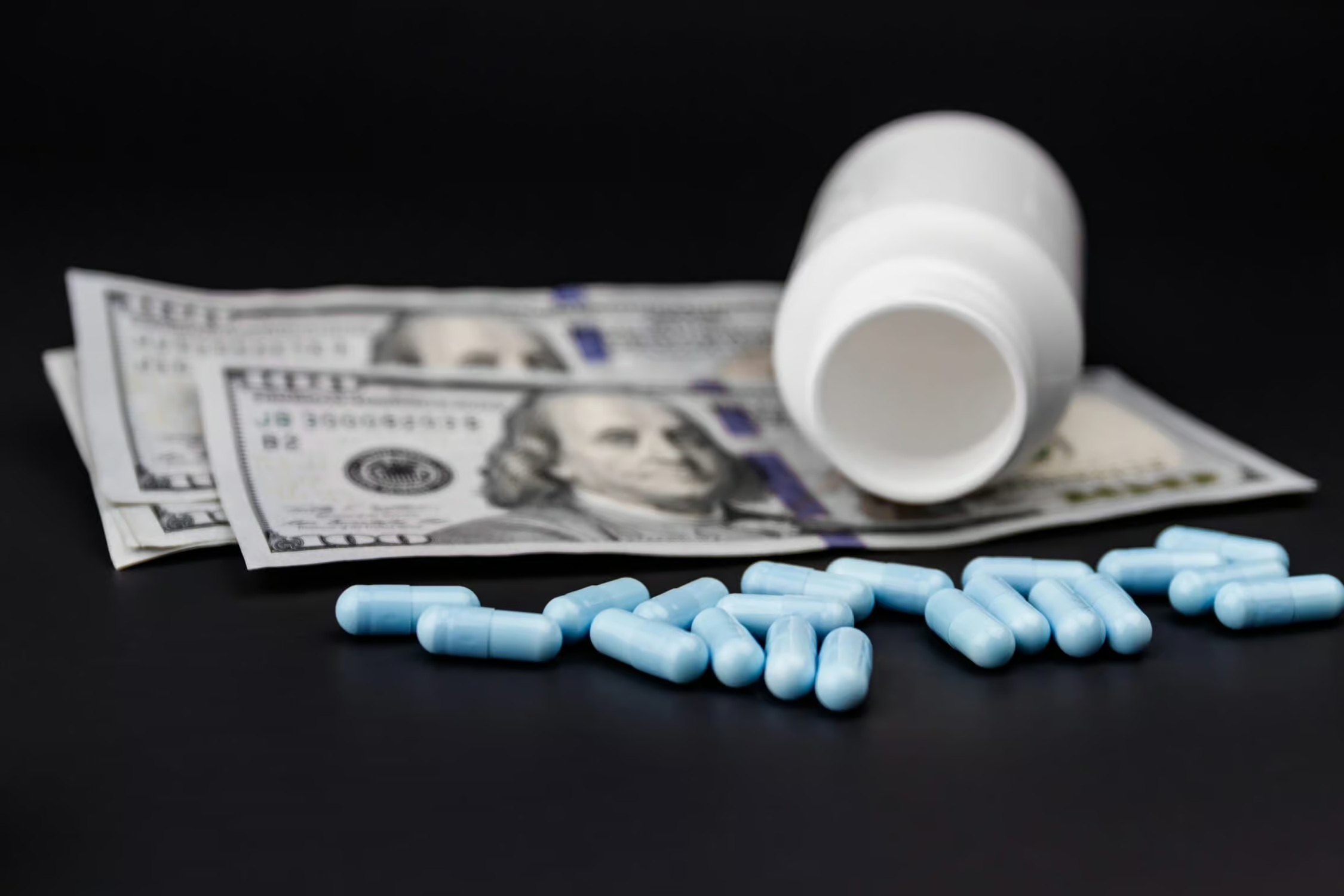
Illicit fentanyl is a master of disguise. It doesn’t have one single look. Most commonly, it’s found as a white or off-white powder, which can easily be mistaken for other drugs. It’s also frequently pressed into counterfeit prescription pills. These fake pills are designed to look identical to legitimate medications like oxycodone (often blue M30s), Xanax, or Adderall. They can be so convincing that it’s impossible to tell them apart from the real thing without lab testing.
Recently, a new form called “rainbow fentanyl” has emerged. This is fentanyl dyed with bright colors to look like candy or sidewalk chalk, appearing as pills, powders, or blocks. The various colors are a marketing tactic and do not indicate a difference in potency. At the end of the day, fentanyl can be made to look like almost anything, making visual identification completely unreliable.
Odorless and deceptive
Let’s circle back to the most important point: fentanyl is odorless. This absence of a sensory warning sign is what makes it so deceptive and deadly. Think about other dangers in life, they often come with a warning. A fire has smoke, and spoiled food has a bad smell. Fentanyl offers no such warning.
A person using another drug like cocaine or heroin may have no idea that their supply has been contaminated with a lethal dose of this synthetic opioid. Their senses give them no reason to hesitate, leaving them vulnerable to an unexpected and tragic overdose. This deceptive nature means we have to rely on tools and knowledge, not our own senses, to stay safe.
Why is fentanyl so dangerous?
The danger of fentanyl comes down to two things: its extreme potency and how it affects the body. As a synthetic opioid, it’s incredibly strong, meaning a minuscule amount can cause a fatal overdose. The estimated lethal dose is just two milligrams, which is visually equivalent to a few grains of salt. It’s almost impossible to see, let alone measure, without specialized equipment. This high risk of overdose is a constant threat with any illicit substance today.
When someone takes a fatal dose, the fentanyl binds to opioid receptors in the brain that control breathing. It slows breathing down, makes it shallow, and can stop it altogether within minutes. When breathing stops, oxygen can no longer reach the brain, leading to brain damage, coma, and death. Here in Kentucky, the threat is very real. A 2024 report showed that fentanyl was involved in 62.3% of all overdose deaths in the state. This isn’t a distant problem, it’s a local crisis affecting our communities every day.
Fentanyl Mixed with Other Substances
Fentanyl is rarely sold on its own on the street. Because it’s so cheap to produce and incredibly potent, drug traffickers use it as an additive to increase the effects of other illicit drugs. It’s commonly mixed with heroin, cocaine, meth, and other substances. This means that people who have no intention of using fentanyl are being unknowingly exposed to it. Someone who has used cocaine for years may suddenly be at risk of an opioid overdose because their usual supply is contaminated. This dramatically increases the risk of a fatal overdose, as their body has no tolerance for opioids. Learning about the dangers of mixing substances is a crucial part of staying safe.
The only reliable method: fentanyl test strips
Since you can’t use your senses to detect fentanyl, the single most effective tool available is a fentanyl test strip. These strips are a crucial harm reduction strategy that can identify the presence of fentanyl in a drug sample before it’s used. They work like a rapid test, giving you a simple yes-or-no answer about whether fentanyl is present. While fentanyl test strips are the only reliable way to detect fentanyl, it’s important to know that even they have limitations. They can’t tell you how much fentanyl is present, and due to the “chocolate chip cookie effect,” the part you test might not have fentanyl while another part does.
Despite these limitations, using them is far safer than guessing. In Kentucky, these test strips are becoming more accessible through local health departments and harm reduction programs. They are an essential tool for anyone who uses drugs or has a loved one who does. Harm reduction strategies, like using test strips and learning how to prevent opioid addiction, can save lives. If you’re concerned about fentanyl use, please contact us for confidential support. We’re here to help, without judgment.
How to use fentanyl test strips
Using a fentanyl test strip is a straightforward process. Here are the basic steps for testing a powder or crushed pill:
- Prepare your sample. Place a small amount of the drug (about the size of a few grains of salt) into a clean, dry container, like a bottle cap. If testing a pill, crush the entire pill and mix it thoroughly before taking a small sample.
- Add water. Add about half a teaspoon of water to the container and stir until the drug sample is fully dissolved.
- Dip the strip. Hold the test strip by the solid-colored end and dip the other end with the wavy lines into the water. Don’t let the water go past the solid line.
- Wait for the result. Keep the strip in the water for about 15 seconds, then remove it and lay it on a flat, non-absorbent surface. The results should appear within a few minutes.
- Read the result. One line indicates that fentanyl has been detected. Two lines, no matter how faint, mean the test is negative for fentanyl.
Recognizing the signs of a fentanyl overdose
Knowing the signs of a fentanyl overdose is critical, as a quick response can save a life. It’s important to distinguish between someone being very high and someone who is overdosing. A person who is high will still respond to their name being called or a firm shake. An overdose is a medical emergency.
Kentucky’s Good Samaritan Law is designed to protect people who call for help in an overdose situation from being prosecuted for drug possession. Don’t let fear stop you from making that call.
Here are the critical signs of a fentanyl overdose:
- Unresponsiveness. The person cannot be woken up, even with loud shouting or a hard shake.
- Slow, shallow, or stopped breathing. Their breathing may be very faint, erratic, or they may make gurgling or snoring sounds.
- Changes in skin color. Their lips and fingernails may turn blue, purple, or grayish, and their skin might feel cold and clammy.
- Pinpoint pupils. Their pupils will become extremely small.
- Limp body. They will be completely limp and unable to move.
If you see these signs of an opioid overdose, call 911 right away. If you have naloxone (Narcan), administer it. It’s a medication that can rapidly reverse an opioid overdose. Stay with the person and follow the dispatcher’s instructions until help arrives.
Fentanyl addiction treatment options
Responding to an overdose is an immediate, life-saving step, but the journey to recovery from fentanyl addiction requires long-term support and care. At Kentucky Addiction Treatment, we offer a full continuum of care designed to meet you wherever you are. Recovery isn’t a one-size-fits-all process, so we provide different levels of care to build a strong foundation for a life free from substance use.
This often starts with a medical detox to safely manage withdrawal, followed by inpatient or outpatient programs like a partial hospitalization program (PHP) or an intensive outpatient program (IOP). A good approach uses evidence-based methods, including medication-assisted treatment (MAT) and dual diagnosis care to address co-occurring mental health conditions. We are committed to providing compassionate, effective addiction treatment and helping you find lasting recovery.
Fentanyl detox and withdrawal
The first step in overcoming fentanyl addiction is often a medically supervised detox. Because fentanyl is so potent, withdrawal symptoms can be severe and intensely uncomfortable, making it very difficult to quit without professional help. Common withdrawal symptoms include severe muscle aches and bone pain, intense cravings, anxiety, insomnia, nausea, and vomiting. Attempting to detox on your own can be dangerous. Medical detox program provides 24/7 medical supervision in a safe, supportive environment. Our team helps recommend ways to manage your symptoms, ensures your physical safety, and provides the compassionate care you need to get through this challenging but crucial first phase of recovery.
Frequently asked questions
Many people ask what fentanyl taste like or whether it has a distinct fentanyl smell or flavor. In most cases, fentanyl does not have a strong taste like other substances. When found in pill form, powders, or mixed with heroin, cocaine, or other drugs, users typically cannot tell it is present by taste alone. This makes illicit fentanyl especially dangerous in street drugs and counterfeit pills. Because you cannot safely identify fentanyl by how it tastes or smells, fentanyl test strips are strongly recommended harm reduction tools to detect fentanyl before opioid use. Relying on taste like other opioids such as morphine is not a safe method.
Fentanyl is a synthetic opioid originally developed to treat severe pain, including breakthrough pain in cancer patients and pain after surgical procedures. Doctors prescribe fentanyl in carefully controlled doses through transdermal patches, nasal sprays, and other regulated forms. However, illicit fentanyl is often manufactured and sold illegally by drug dealers and mixed into heroin, cocaine, and other street drugs. Because it is a potent opioid with extreme potency, even a tiny amount can cause respiratory depression and fatal overdose. Compared to prescription opioids derived from the poppy plant, fentanyl is significantly stronger, which contributes to rising overdose deaths and the ongoing opioid crisis.
A fentanyl overdose is a medical emergency and a form of opioid overdose. Signs may include slow or stopped breathing, blue lips or fingernails, unconsciousness, choking sounds, and extreme drowsiness. Because fentanyl is highly addictive and extremely potent, overdose deaths can happen quickly, especially when drugs are laced with fentanyl without the person’s knowledge. Young adults and others using illicit drugs are particularly at risk. If you suspect an overdose, call emergency services immediately and administer naloxone if available. Quick response can prevent fatal fentanyl deaths.
Your path to recovery starts in Kentucky
At Kentucky Addiction Treatment, we provide a supportive environment where you can heal. Our team of compassionate experts is here to guide you with proven treatment methods and personalized care. The first step is often the hardest, but it’s one you can take right now. Reaching out for help is an act of courage.
The information here can feel overwhelming, but the most important takeaway is that help is available, and recovery is real. You don’t have to live in fear of fentanyl or the cycle of addiction. A supportive, professional team can guide you through detox, treatment, and into a life of lasting sobriety. If you or someone you care about is struggling, the first and simplest step is to make a call. You can speak with a compassionate care coordinator at (888) 771-8718 to learn more about your options. At Kentucky Addiction Treatment, we’re here to answer your questions and help you start your journey. Please don’t hesitate to contact us today.
Sources
- CDC. (2024). Fentanyl Facts | Stop Overdose – CDC. Centers for Disease Control and Prevention.
- NIDA. (2025). Fentanyl | National Institute on Drug Abuse (NIDA) – NIH. National Institute on Drug Abuse.
- DEA. (2024). Facts about Fentanyl – DEA.gov. Drug Enforcement Administration.
- PubChem. (2025). Fentanyl | C22H28N2O | CID 3345 – PubChem – NIH. National Institutes of Health.
- EPA. (2018). Fact Sheet for OSCs: Version 1.0 05/22/2018 Fentanyl and … – EPA. United States Environmental Protection Agency.
- UC Davis Health. (2023). Fentanyl facts, overdose signs to look for, and how you can help … University of California, Davis.
- NIOSH. (2025). Fentanyl: Incapacitating Agent | NIOSH – CDC. Centers for Disease Control and Prevention.
- SAMHSA. (2024). Fentanyl and Xylazine Test Strips – SAMHSA. Substance Abuse and Mental Health Services Administration.
- FDA. (2024). Information about Medications for Opioid Use Disorder (MOUD) – FDA. Food and Drug Administration.
- Kentucky ODCP. (2025). 2024 Drug Overdose Fatality Report. Office of Drug Control Policy, Kentucky.